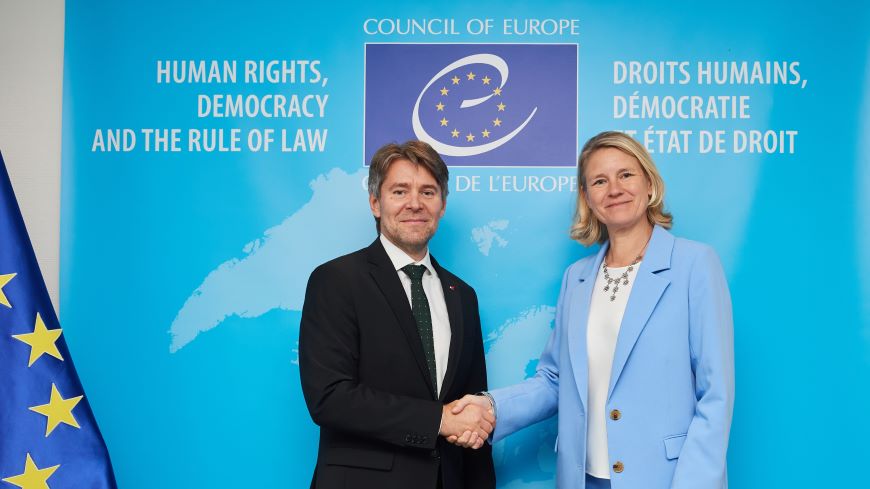
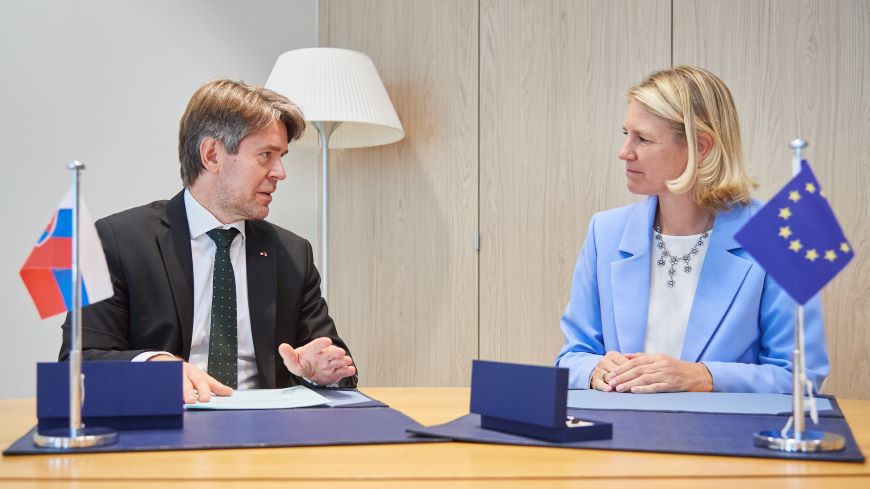
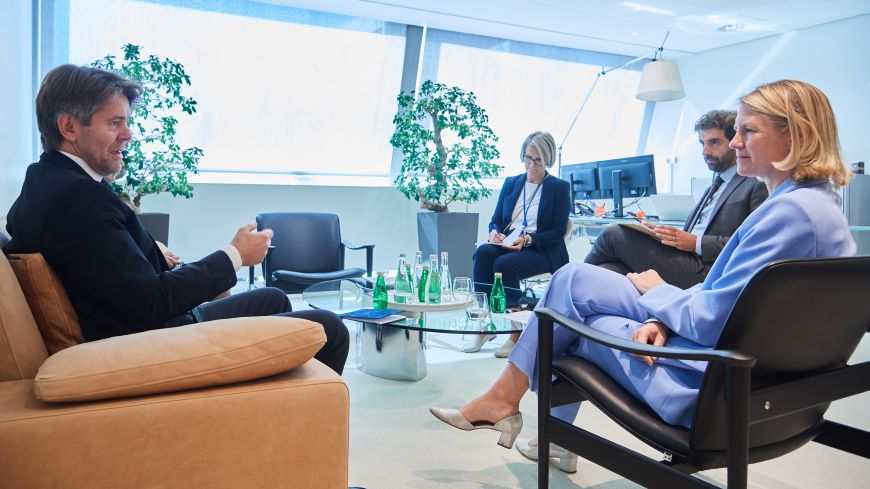
Questions related to accountability and compensation for Ukraine, to regional co-operation, as well as to the reform of the Council of Europe to better respond to the deteriorating democratic security and to address hybrid threats, were central to today’s meeting between Deputy Secretary General, Tanja Gonggrijp, and State Secretary of the Ministry of Foreign and European Affairs of the Slovak Republic, Marek Eštok.
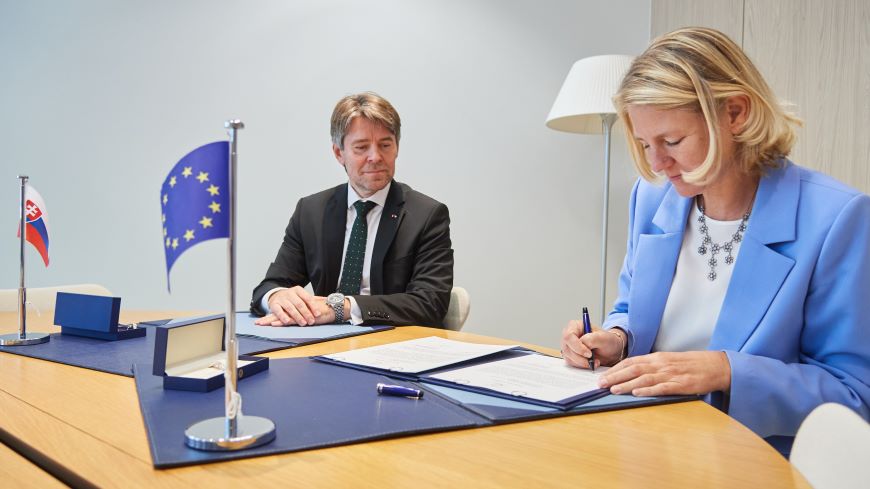
During his visit to Strasbourg, Eštok signed on behalf of the Slovak Republic the Convention establishing an International Claims Commission for Ukraine, bringing the number of signatories to 41. The Deputy Secretary General expressed her appreciation for this step and encouraged the Slovak Republic to proceed with ratifying the Convention at the earliest opportunity.
She recalled that the Council of Europe is committed to swiftly setting up the Claims Commission. Twenty-five ratifications, alongside sufficient financial commitments, are needed for the convention to enter into force and for the commission to start its work. Nine countries and the European Union have so far ratified the Convention.
The International Claims Commission will be the second part of a comprehensive compensation mechanism for victims of the Russian Federation’s war of aggression. It will build upon the existing Register of Damage for Ukraine.
Tanja Gonggrijp invited the Slovak Republic to join the agreement on the Special Tribunal for the Crime of Aggression against Ukraine. The discussion also covered the continuation of the Council of Europe’s support to Ukraine via a new Action Plan on Democratic Security for Ukraine 2027-2030, with a focus on post-war recovery and reconstruction.
Democratic security and reform
Larger issues related to democratic security, hybrid threats, and the Council of Europe’s capacity to address them were also discussed.
The Deputy Secretary General and the State Secretary agreed that the changing geopolitical landscape requires a new vision for the Organsation grounded in its mandate. The New Democratic Pact for Europe is part of that vision: it is an innovative initiative of the Council of Europe aimed at protecting democratic institutions, free media, independent courts and the integrity of free public debate.
The Council of Europe itself must also continue to adapt to the ongoing transformation of the international order, in order to become more effective and impactful, and to be able to better advance democratic security through law, the Deputy Secretary General noted. The reflection process on the reform of the Organisation is ongoing, and the Deputy Secretary General invited the Slovak government to actively contribute to this process.