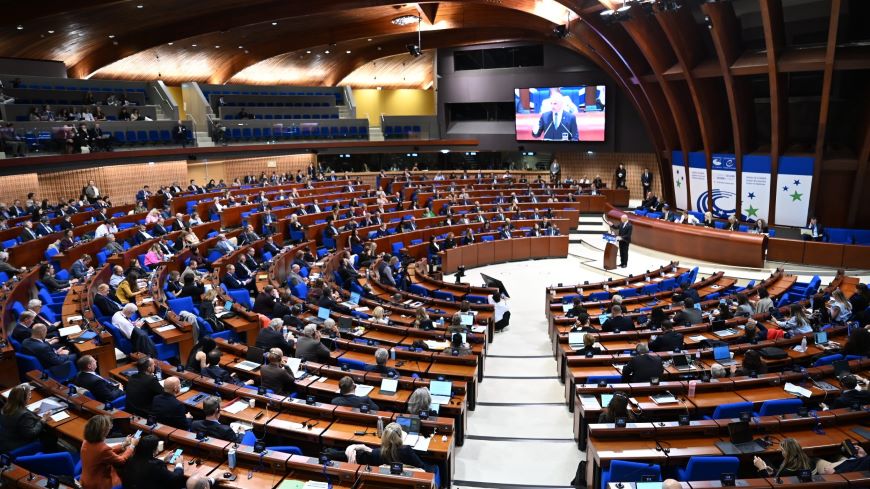
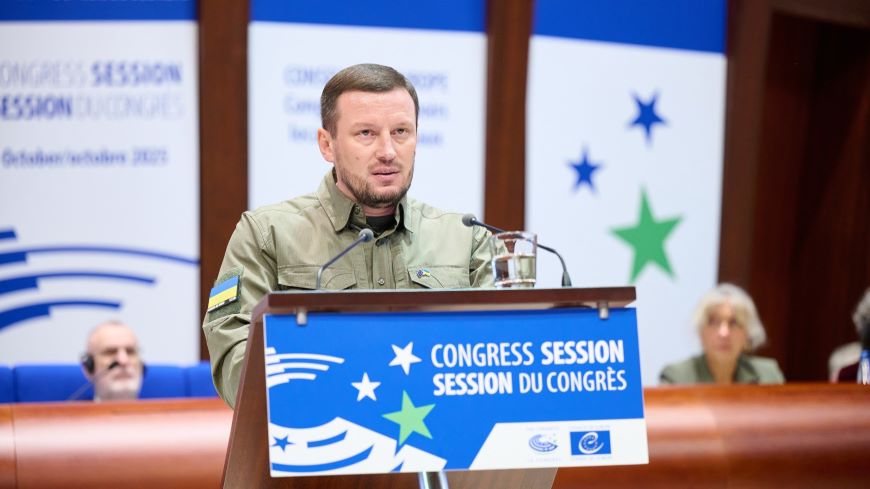
Europe needs to prepare now for the planned relocation of homes, businesses and infrastructure from coastlines increasingly exposed to erosion. Local authorities must lead to protect livelihoods, coastal heritage and communities at risk, underlined the Council of Europe’s Congress of Local and Regional Authorities in a resolution and a recommendation adopted during its 51st session that started in Strasbourg today.
Presenting their report on “How can we cope with coastal erosion?”, co-rapporteurs Anthony Buchanan (United Kingdom, ILDG) and Fanis Spanos (Greece, EPP/CCE) pointed out that across 28 European countries, economic losses due to coastal erosion exceeded €1 billion per year and could escalate to €800 billion annually by the end of the century if effective action is not taken.
Nearly one in two Europeans lives near a coast
“Europe’s coastlines are among our most valuable assets. They host major infrastructure, support vital economic activity, and are centres of cultural and natural heritage. Nearly half of Europe’s population lives near a coast. Today, over a quarter of Europe’s coastline is eroding. Continued occupation of high-risk zones puts families, livelihoods, and heritage at risk, raising concerns on human rights to life, to private life and property,” said Fanis Spanos.
“Defending Europe’s coasts with traditional methods such as sea walls is becoming less sustainable as sea levels rise has doubled in recent years and is on course to rise by another 44 cm by 2100, while storms are becoming more intense and frequent and extreme storm surges are likely to occur 20-30 times more often by 2050,” said Anthony Buchanan.
“Planned retreat” from the coast needed
The report makes clear that for many of Europe’s coasts there should now be an urgent movement towards “planned retreat” in which new development is banned or restricted and homes, businesses and assets – including road and rail – are moved to more climate resilient places inland.
For example, France estimates that around 900 kilometres of mainland coastline are receding, with more than 500 municipalities affected. In Quiberville-sur-Mer, a €9 million investment moved a public campsite inland; the report says municipal revenue subsequently rose by 25%.
Coastlines remain vital to economy
The resolution adopted by Congress points out that 40% of Europe’s GDP comes from coastal regions and 80% of low-elevation coast is at risk of future erosion. Better planning and relocation now, therefore, would save significant money later. Leadership in this movement should come from local and regional authorities, through planning policies, granting temporary use of land and innovating with dismountable buildings and assets.
Furthermore, local and regional authorities should update risk maps, introduce and periodically review no-build and buffer zones, and make adaptation plans that assess the legal, social and financial consequences of different choices. This planning however needs to be done in conjunction with the people affected – transparent consultation, public information and sustained political support are essential, alongside measures to protect livelihoods, coastal heritage and vulnerable communities.
The Congress also notes that making space for beaches, dunes and wetlands to move inland can also help preserve natural habitats and their wider benefits.
In its recommendation, the Congress called on national authorities to provide the legal frameworks, funding, expertise and support needed to make planned relocation fair and workable – including buy-out and relocation assistance, time-limited leases and insurance arrangements.
Urgent debate on the right to a clean environment on the agenda
As part of the session, on Thursday, 29 October the Congress of Local and Regional Authorities will hold an urgent debate and adopt a recommendation “Towards a healthy environment from the local level up”. It will focus on the need for a legally binding instrument of the Council of Europe recognising the right to a clean, healthy and sustainable environment.
 Learn more about the Council of Europe’s Congress
Discover how the Council of Europe works for the environment in Europe and beyond