In September 1946 Winston Churchill took to the podium at the University of Zurich to deliver the first of what would become a series of speeches that in many ways defined the European landscape that would develop today. Despite having led the United Kingdom during the Second World War, it was not triumphal. Most of the continent lay in waste owing to the ravages of Nazism, while the iron curtain of communist dictatorship was blacking out the future for the peoples of Central and Eastern Europe. Churchill was able to see beyond the base ethnic hatreds and caustic authoritarianism that had led to this point. He called for reconciliation.
“We must recreate the European family in a regional structure called, it may be, the United States of Europe, and the first practical step will be to form a Council of Europe. If at first all the states of Europe are not willing or able to join a union we must nevertheless proceed to assemble and combine those who will and who can. The salvation of the common people of every race and every land from war and servitude must be established on solid foundations, and must be created by the readiness of all men and women to die rather than to submit to tyranny.”
Why Strasbourg?
Within a few short years that vision had started to come to fruition. Strasbourg was chosen as the seat of the new Council of Europe, a symbol of reconciliation – the city and the region had been fought over since the Middle Ages by various European powers, including ultimately, in the 20th century’s great wars, France and Germany. Alsace had in the previous decade been scarred by dictatorship, by widespread violence and torture, by the devastation of the Jewish Holocaust on its communities, and by brutal bombing and fighting.
Churchill’s vision was made manifest. In order to avoid a repeat of the horrors of Europe’s first half of the century – to say never again – European countries would commit not only to cooperation and unity, but to democracy, human rights and the rule of law. Despite setbacks – most notably the Russian attacks on Ukraine and Georgia and the occupation of part of Moldova – this has been broadly successful. Thanks to the standards that the Council of Europe sets, Europeans are freer, more healthy and more prosperous than at any time in history.
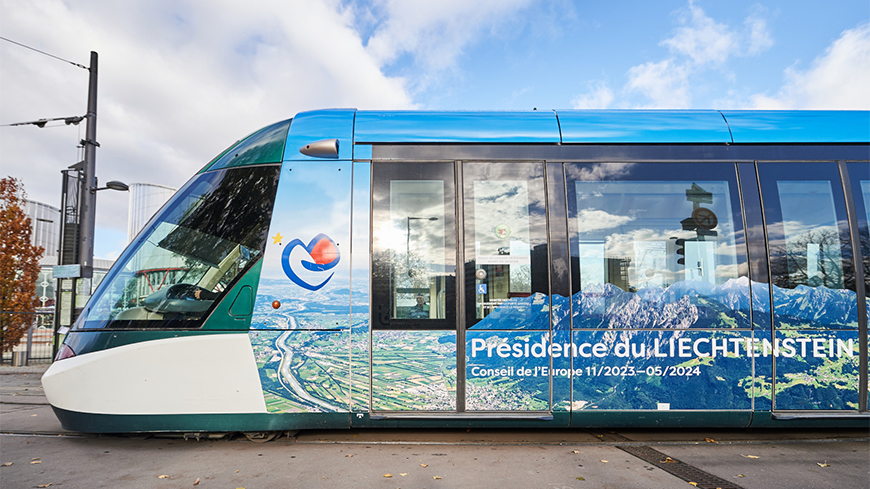
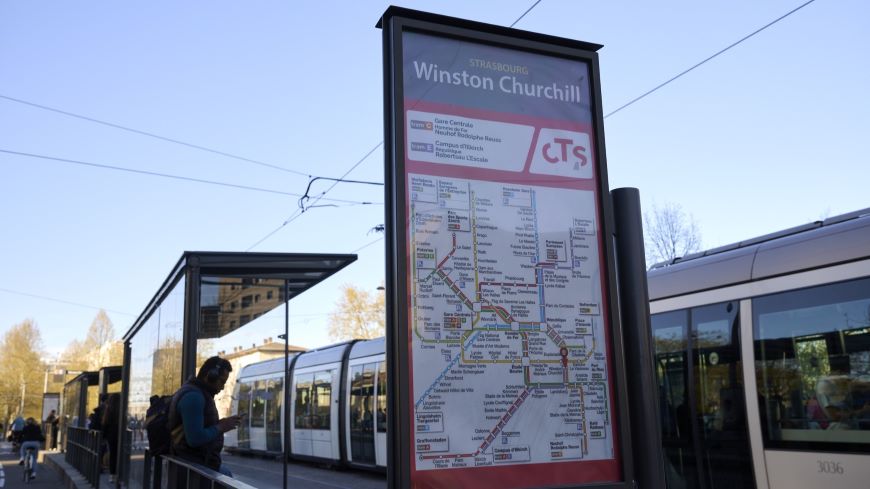
This has been transformative for places wracked by centuries of strife, like Alsace. In recognition of Churchill’s achievement in setting the Old Continent on a new course, the city of Strasbourg has honoured the former British PM in various ways, most notably with Place (square) Winston Churchill, Pont (bridge) Winston Churchill, and even a tram stop named after the great man.
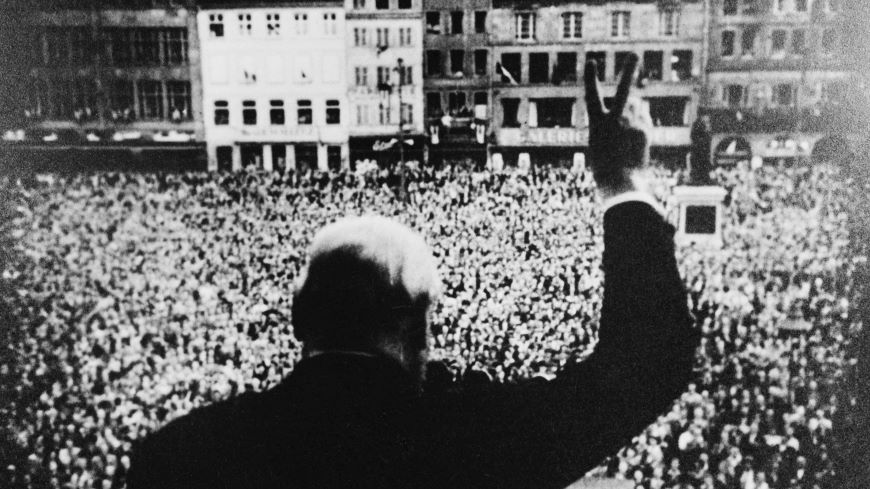
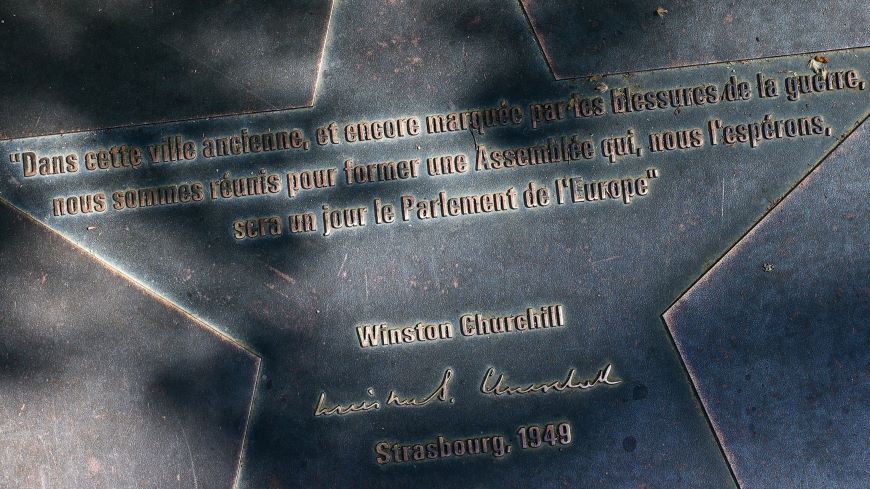
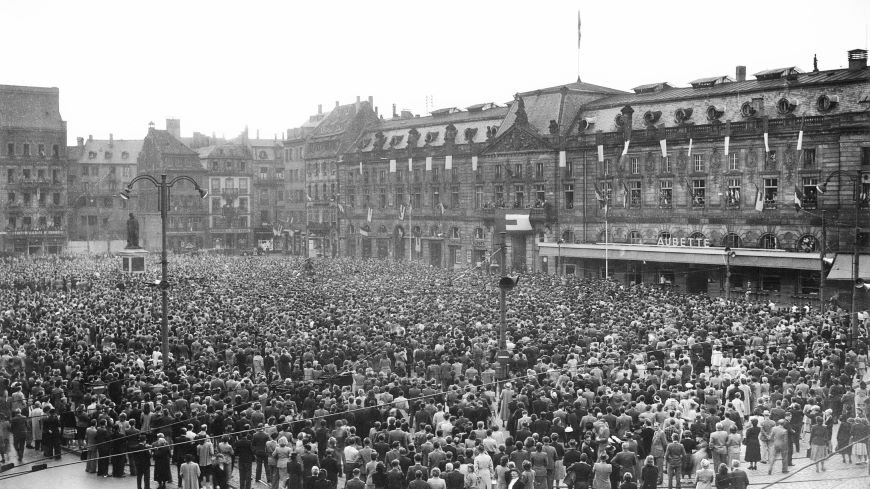
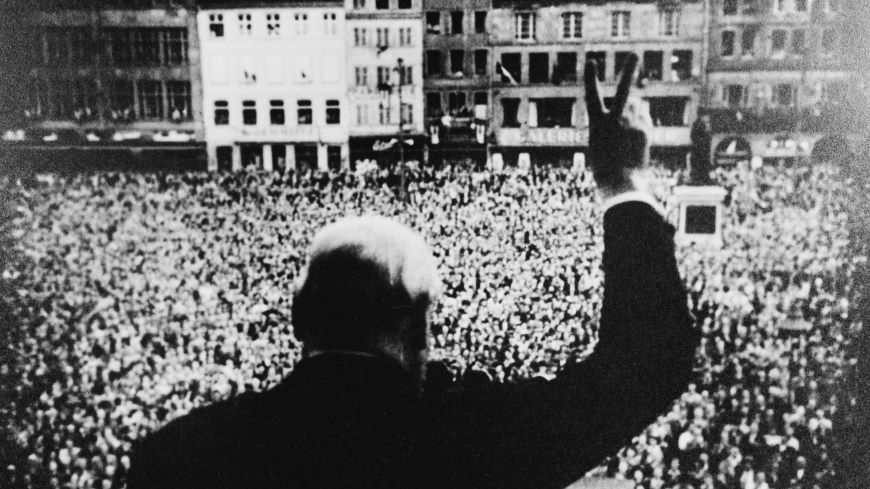
In 1949 Winston Churchill spoke to a huge crowd in Place Kléber in Strasbourg. He opened wittily, saying, “Steel yourselves, I am going to speak French”. His closing, however, was a message of hope that remains relevant today:
“The dangers that threaten us are great, but our strength is also great. There is no reason that we can’t succeed in reaching this goal of establishing the structures of this United Europe, whose moral principles will command the respect and recognition of humanity.”
***
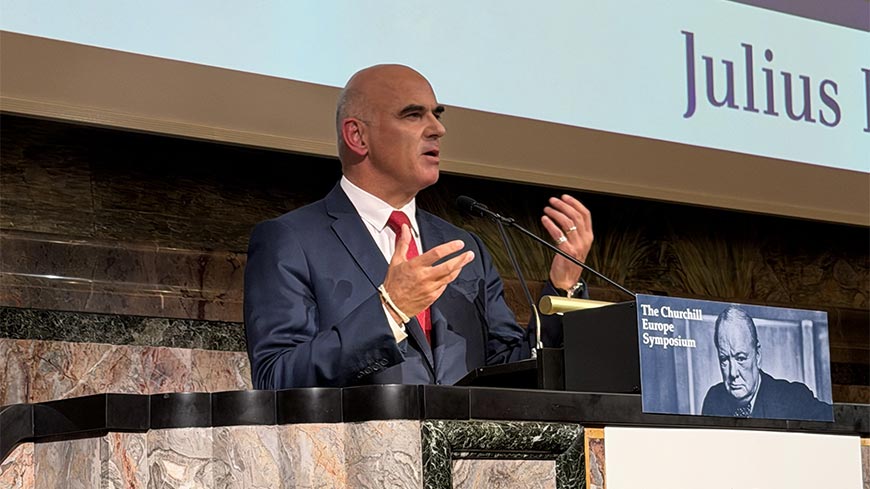
The Council of Europe will be involved in two upcoming events to celebrate the anniversaries of Winston Churchill’s two key speeches on building a Council of Europe, which will take place in Zurich on 16 September and Strasbourg on 17 November 2026.