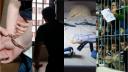
Police: persistent poor detention conditions contrast with improved treatment by officers
The CPT observed an improvement in the conduct of Romanian police officers, and welcomed the authorities’ zero-tolerance policy towards ill-treatment. The vast majority of persons deprived of their liberty interviewed indicated that they were treated with professionalism and respect. Nevertheless, some allegations were received, including from children, of physical ill-treatment such as slaps and punches. To further combat ill-treatment and impunity, the Romanian authorities should take additional measures such as training in non-coercive interviewing, expanding technological support, and providing prosecutors with their own investigators.
Material conditions in police detention facilities remain deplorable, with issues of overcrowding, humidity, dilapidated mattresses, poor hygiene, and inadequate food. Many detention facilities are still located below ground level, limiting access to natural light. Detained persons, including children, are not offered any meaningful activities for weeks on end apart from access to outdoor facilities, which are often small and insufficiently equipped, for one hour per day. The CPT considers that prolonged detention under these conditions could amount to degrading treatment. The Romanian authorities should take urgent measures to offer appropriate conditions both in terms of material conditions and regime. Further, the CPT reiterates its view that persons placed in pre-trial detention should be under the authority of the National Prison Administration.
Prisons: overcrowding and living conditions still problematic
The CPT recognises the Romanian authorities’ efforts in reforming the prison system, but notes that overcrowding persists, with prisons operating at 119.5 % capacity. The prison population has risen by 20% since 2020. Overcrowding was evident in all four establishments visited, with the highest levels found at Iaşi (140 %) and Botoşani (130 %) Prisons. Clear efforts to improve the living conditions were undermined by overcrowding. Many detained persons were offered only 2 to 3 m² of living space, with poorly maintained cells, inadequate furniture, worn bedding, and frequent infestations of bed bugs and cockroaches. The Committee urges the Romanian authorities to ensure that all persons are provided with at least 4 m² each in multiple occupancy cells. Further, they should analyse the factors contributing to overcrowding, and adopt policies to stabilise or reduce the prison population. The CPT also observed deficiencies in accommodating prisoners with specific physical needs, and recommends structural adaptations.
The CPT noted the significant progress made regarding prevention of ill-treatment by prison staff. However, inter-prisoner violence remains a concern at Iaşi Prison, particularly among young adults placed in pre-trial detention and adults placed in the maximum-security section.
Staffing levels remain insufficient in detention areas in all the prisons visited, with only a few custodial officers overseeing large numbers of prisoners. The CPT calls for urgent reinforcement of staffing, a reassessment of roles, and the dissolution of special intervention groups (EOS), advocating instead for increased staff in maximum-security units and a more dynamic security approach.
While out-of-cell activities have been expanded, much more needs to be done to ensure all detained persons have access to purposeful activities, work, and vocational training.
Healthcare provision has improved notably in terms of documenting and reporting of injuries. However, staffing shortages persist, especially for general practitioners and nurses. Measures should also be taken to guarantee medical confidentiality, ensure gender-specific screening for women prisoners, and develop a strategy for inmates with substance use issues. Mental healthcare also requires critical reinforcement, as there is still insufficient input from qualified mental healthcare professionals, including psychiatrists.
Regarding security, the CPT is critical of the use of padded cells and the application of mechanical restraint, including for punitive purposes, recommending that the former be properly regulated and the latter be immediately ended. Likewise, tear gas should not be used in prison except in exceptional circumstances and when surrounded by appropriate safeguards, and the routine carrying of truncheons, as observed in Craiova Prison, should be ended. The CPT also reiterates that self-harm and attempted suicide should not constitute disciplinary offences.
Children and young adults in conflict with the law: enhanced focus needed
The CPT invites the Romanian authorities to reassess the location of Educational and Detention Centres to better reflect residents’ origins and community reintegration, as well as to improve staff recruitment. Most residents spoke positively of staff, yet allegations against staff of ill-treatment, including slaps and baton blows, were received at Craiova, and of excessive use of force at Târgu Ocna. Inter-resident violence was under control at Craiova, but frequent and severe at Târgu Ocna, and included sexual assault. The CPT calls for an urgent review of violence prevention policies and an enhancement of pedagogic approaches. Further, staff working in these centres should not carry batons.
Living conditions were generally acceptable. However, improvements are needed at Târgu Ocna, including personalisation of rooms and the removal of cage-like exercise yards. Consideration should be given to offering single-room accommodation to young persons. The Craiova Centre provided commendable education and activity programming, while at Târgu Ocna, the regime offered remained limited and hampered by a lack of staff.
In their response, the Romanian authorities notably indicate that they are pursuing their plans to expand and modernise the prison estate, with investments foreseen over the period 2026 - 2030. Staffing needs in the prison system have been reassessed and reinforcement of staffing levels across the system is being pursued, within the existing legally mandated budgetary limitations. The repeal of the provisions requiring prison healthcare staff to certify that prisoners are fit to undergo disciplinary punishment and of those making self-harm and attempted suicide disciplinary offences will be pursued when the relevant legislation is next amended.
- Read the report in English.
- Read the executive summary and observations in English, in Romanian, in French.
- Read the response in English.
- Read the visit newsflashes
- The CPT and Romania