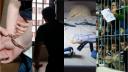
The primary objective of the visit, which took place from 2 to 13 September 2024, was to examine the treatment of persons apprehended and detained by various police agencies at the State, Entity and Cantonal levels, as well as that of sentenced and remand prisoners held in a number of prison establishments under the jurisdiction of the State and Entity Ministries of Justice. The situation of the residents of three social care institutions in both Entities was also examined, along with that of foreign nationals deprived of their liberty under State immigration law.
The CPT once again received numerous allegations of physical ill-treatment of detained persons by police officers in both Entities. The alleged ill-treatment generally consisted of slaps, punches, kicks, blows with batons and from the barrel of pistols or assault rifles to various parts of the body. The ill-treatment was primarily inflicted by members of special intervention units of the Sarajevo and Tuzla Cantonal Special Intervention Police, the Gendarmerie and the Anti-Terrorist Unit of the Republika Srpska Police (SAJ). The Committee concludes that persons deprived of their liberty by these law enforcement agencies are at risk of physical ill-treatment and of suffering serious injury, especially those persons arrested during anti-drug and other anti-organised crime operations. In this respect, the Ministries of the Interior at the Entity and Cantonal levels should issue a clear statement of zero tolerance for torture and ill-treatment of detained persons, provide targeted training on manual control techniques, notably to members of special intervention police units, introduce audio-visual recording of all police interviews, and better regulate the use of force and the independent assessment of its proportionality.
As regards the situation in prison establishments, the CPT acknowledges the downward trend in the prison population across the three prison systems at the State and Entity levels, as well as the ongoing efforts to renovate the prison estate. The CPT calls for the practice of inmates being placed in padded cells with straitjackets at Zenica Prison to be discontinued. It also notes that the conditions in the remand section of Tuzla Prison remain sub-standard, particularly with regard to overcrowding, inadequate ventilation, poor maintenance and hygiene, and the presence of vermin. In relation to healthcare provision for prisoners, the Committee criticises the inadequate presence and deficient staffing levels at Tuzla Prison.
With regard to female prisoners, the CPT once again criticises the de facto prolonged segregation to which female remand prisoners are subjected due to the fragmentation of the prison system. Other recommendations include the introduction of a specific medical screening for female prisoners, with a view to identifying vulnerabilities such as mental healthcare needs, sexual abuse and other forms of gender-based violence inflicted prior to their entry into prison.
In relation to the situation in social care homes, the CPT notes that in the three homes visited, living conditions were extremely poor and often lacked basic maintenance, cleaning and hygiene. The worst situation was observed in Pavilions IV and V in Višegrad, where material conditions were appalling, with dilapidated facilities, broken doors and furniture, and dreadful hygiene. Many of the bare and austere rooms had a pervasive stench of urine and faeces, with some residents lying in dirty bedding covered with urine or excrement, while others were not provided with pillows or bedding. Some residents were found totally naked. In the CPT’s view, residents’ living conditions in these two units may amount to inhuman and degrading treatment. Urgent measures to upgrade living conditions, including regular maintenance and cleaning must be undertaken. In one case, due to a heightened risk of self-harm, a female resident had been fixated to a bed by her arms using textile straps, day and night for several years. The CPT demanded immediate action be taken to reduce the use of means of restraint to manage this resident and to find alternatives to prevent her from self-harming.
Conditions were extremely poor for foreign nationals detained in the holding rooms and sanitary annex inside the prefabricated container located near the tarmac at the Restricted Zone of Sarajevo Airport. A mother with children, including toddlers, had been detained for three days inside the locked container without any activities on offer or even access to outdoor exercise. The BiH authorities were requested to replace the container with a suitable holding facility equipped to provide adequate conditions of detention to persons refused entry into the country. At Lukavica Immigration Detention Centre, where living conditions were poor and carceral, several persons provided credible allegations of deliberate physical ill-treatment (severe beatings) of a detained foreign national with a severe mental disorder by security staff. When met by the delegation, the person concerned was found in a critical state in disciplinary solitary confinement and in need of urgent psychiatric treatment and care. The CPT made a series of recommendations to improve the treatment of persons held at the centre.
The authorities of Bosnia and Herzegovina set out their response to the CPT recommendations, focusing notably on developments such as the training of police officers on the prevention of ill-treatment of detainees, and the creation of more effective systems for the reporting and investigation of allegations of police misconduct. The response also includes an update on the establishment of a Preventive Mechanism for the prevention of torture within the Ombudsman of BiH, as well as its staffing and operationalisation.
- Read the report
- Read the executive summary and observations
- Read the response in English, in Bosnian
- Read the visit newsflash
- The CPT and Bosnia and Herzegovina