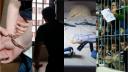
The purpose of the September 2025 ad hoc visit to Italy was to examine the treatment and conditions of detention of persons held in a number of prison establishments. It was also an opportunity to assess the measures being taken by the Italian authorities to tackle the chronic challenges facing the prison system notably, prison overcrowding, staff numbers and training, the high number of deaths in prison, and the quality of healthcare provided to prisoners.
The overwhelming majority of the prisoners met by the CPT stated that they had been treated correctly by prison staff. However, the report notes that the phenomenon of inter-prisoner violence and intimidation remains a persistent feature within the Italian prison system. Issues such as the lack of call bells in most cells and the absence of custodial officers on the accommodation sections are identified as factors contributing to inter-prisoner violence. The Italian authorities should put in place a comprehensive strategy for preventing inter-prisoner violence and intimidation through the promotion of a real dynamic security approach by prison staff.
At the time of the visit, nearly one quarter of prisoners were being accommodated in cells affording each of them only 3 to 4 m2 of living space. The report calls upon the Italian authorities to ensure conformity with the CPT minimum standard of 4 m2 of living space per person in multiple-occupancy cells (excluding the sanitary annexe). In parallel, the CPT emphasises the importance of promoting a full range of alternative sanctions to reduce the number of persons held in prison, while also recognising the need to invest in upgrading the prison infrastructure and its capacity. The Committee acknowledges Italy’s attempts to improve its prison system through the Piano Carceri and the appointment of a Special Commissioner on Prison Estate. However, in the Committee’s view, given the chronic challenges facing the prison system, implementation of the plan must be accelerated.
The material conditions of detention varied both between the establishments visited and even within each prison. Generally, the poor conditions were found in the so-called “Article 32 sections” (notably in terms of poor hygiene, state of repair and maintenance) which accommodate segregated prisoners. The situation was particularly dire at Florence Sollicciano Prison, where serious structural deficiencies and continual maintenance challenges were found: constant water ingress, high levels of humidity and damp, mould on the walls, flaking ceilings and detaching plaster. These conditions render the prison unsuitable for accommodating prisoners. The CPT considers that Florence Sollicciano Prison is not fit for purpose.
The report acknowledges the efforts being made by the Italian authorities to promote additional work opportunities for prisoners within the prisons visited, including by offering fiscal advantages through the so-called Legge Smuraglia. Nevertheless, in the Committee’s view the range of activities offered to prisoners, notably those placed in the “Article 32 sections” in light of their variegated and vulnerable profile, must be further developed. All prisoners should be offered a structured daily programme of individually tailored activities overseen by a multi-disciplinary team. In addition, the CPT again reiterates the need to reform the stringent, restrictive measures applied to prisoners subject to various forms of solitary confinement such as the regime of "sorveglianza particolare" and the court-imposed solitary confinement for lifers, or "isolamento diurno”.
The findings of the 2025 visit also reveal that there is still no functioning dynamic security approach by custodial staff as set out in the European Prison Rules. In the CPT’s view, a more operational approach for preventing incidents and maintaining order based on proactive communication, trust-building and daily engagement with prisoners as a means to reduce tension and improve safety, must be effectively promoted throughout the prison system.
As regards the quality of healthcare provided to prisoners by the competent regional healthcare authorities, the report identifies significant territorial disparities. In particular, the Committee noted deficiencies in terms of inadequate staffing levels and facilities, delays in access to psychiatric care and in the review of fitness for detention of vulnerable persons in the prisons visited in the regions of Campania and Puglia. In contrast, at Florence Sollicciano and Genoa Marassi Prisons, the CPT noted the generally excellent provision of healthcare in terms of facilities, staffing levels and governance.
The report also assesses the measures in place to prevent suicides in prisons and notes the presence of robust multi-disciplinary anti-suicide protocols on the screening of prisoners. However, the CPT found that the effectiveness of such anti-suicide protocols could be undermined by a combination of factors such as poor healthcare staffing, the lack of a national strategy for the reduction and removal of ligature points within prisons (notably those on windows, beds, cell gates and light fittings), and the continued absence of call bells within most cells.
In order to ensure that establishments meet the specific needs of women, the CPT reiterates the need for the Italian authorities to incorporate a specific gender-based approach towards female prisoners and for women’s sections within large male establishments to have a separate prison management.
In their response, the Italian authorities set out a detailed account of the measures taken to address the recommendations outlined by the CPT. In particular, information is provided on the status of the implementation of the Piano Carceri and the activities of the Special Commissioner on Prison Estate to tackle prison overcrowding and its pervasive effects. The response also includes information on inspections and monitoring carried out by the Prison Administration (DAP) in relation to incidents of inter-prisoner violence, the prompt and thorough analysis of critical events through the situation room of the DAP’s headquarters in view of establishing lessons learned and targeted inspections. Information is also provided on the changes introduced to improve material conditions inthe prisons visited. Particular focus is placed on plans to rectify the challenging structural situation at Florence Sollicciano Prison. The response also refers to the recruitment of additional prison staff (both custodial and treatment staff) and their training, with an emphasis on the introduction of a dynamic security approach. Regarding the CPT's observations on the territorial disparities in the delivery of prison healthcare, the Italian authorities report the establishment of a technical monitoring group within the Ministry of Health to address the variations noted by the Committee in the provision of healthcare to prisoners.
- Read the report (in English)
- Read the executive summary (in English, in French, in Italian) [coming soon]
- Read the response of the authorities (in English)
- Read the visit’s newsflash
- The CPT and Italy